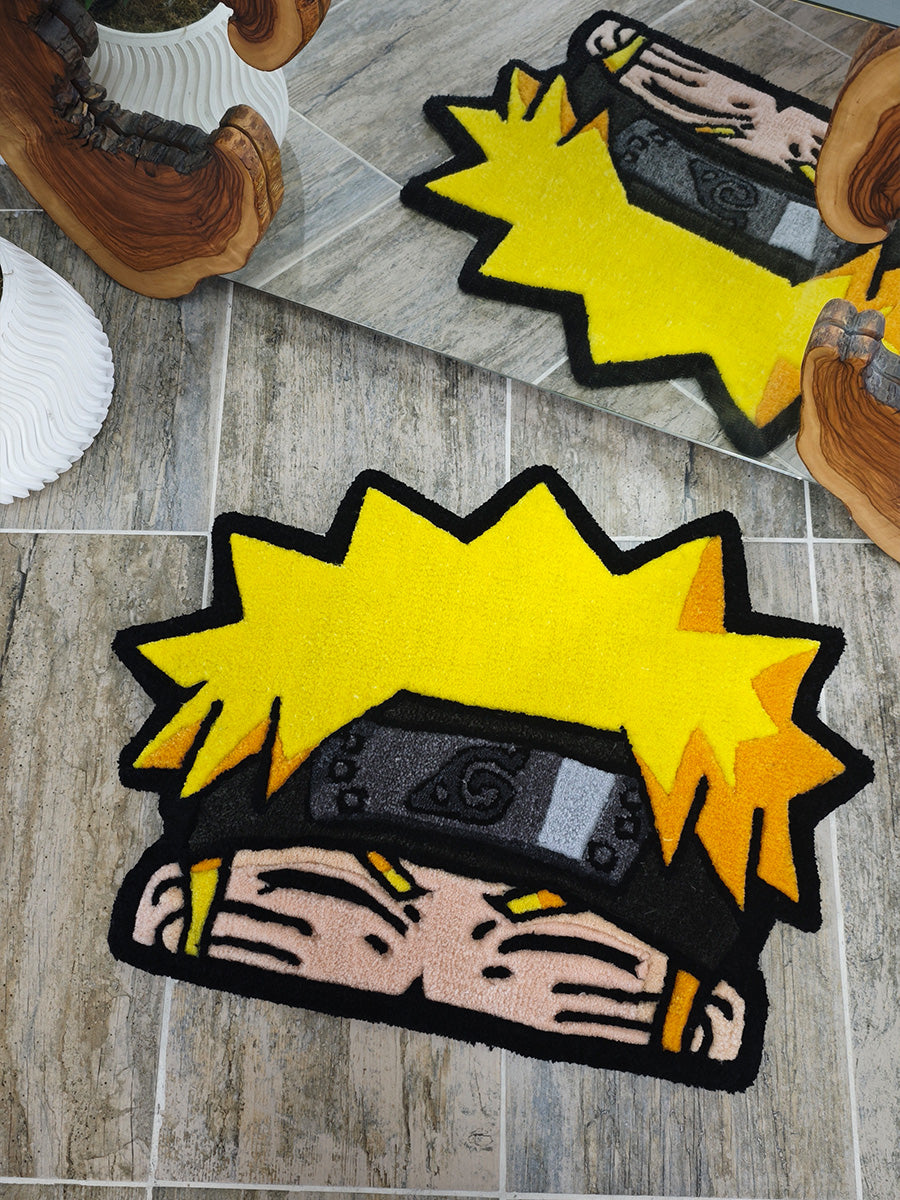
In the art of tufting, organic and freehand drawings can forgive mistakes; but geometric patterns are ruthless. A single millimeter shift in a line, a distortion of a 90-degree angle, or a circle turning into an ellipse makes the entire design look "amateur."
If you want to produce modern, Scandinavian, or Bauhaus-style rugs, the stage before you even pick up the tufting gun—"stencil preparation"—is the most critical part of the process. Here is the flawless stencil guide with GG Tufting expertise.
1. Design: The Power of Vector Graphics
Pixelation (blurriness) is the biggest enemy in geometric patterns. When you enlarge a small image with a projector, lines turn into staircases. That's why professionals work with Vectors.
| FEATURE | Pixel (JPG/PNG) | Vector (AI/SVG) |
|---|---|---|
| Scaling | Distorts, blurs | Remains sharp at any size |
| Editing | Difficult and limited | Lines can be changed instantly |
| Tufting Suitability | Low (Lines are unclear) | Excellent (Razor sharp) |
| Software | Photoshop, Paint | Illustrator, Procreate (Vector) |
2. The Golden Rule: Mirroring
This is the infamous mistake that 90% of tufting beginners make at least once. The front of the tufting rug is the exact reverse of the back you are working on. In asymmetrical patterns or text, the result can be disastrous.
3. Transferring the Stencil to Fabric
Using a ruler on fabric is difficult for geometric patterns because fabric stretches. Here are the methods that yield the clearest results:
The industry standard. Projects the image onto the fabric. The key is ensuring the projector is facing dead-center (Keystone adjustment).
Add a square grid over your design. Create the same grid on the fabric using yarn. Draw by referencing square by square.
4. Markers and Color Coding
In geometric patterns, "boundaries" are everything. The marker you use determines the quality.
- Thick Tip Acetate Marker: For the outer frame and main outlines. It gives you a "safety margin."
- Fine Tip Marker: For inner details and complex transitions.
It's common to get into a trance with the sound of the tufting gun and fill the wrong color into the wrong box. After drawing the stencil, write the color code inside each area (e.g., B1 = Blue 1, BL = Black).
Remember, every shot you make with the tufting gun can be undone, but a rug built on a bad stencil can never be fixed. GG Tufting's professional fabrics with guide lines make your job easier.