In tufting projects, 50% of the success happens before you even pick up the gun. Properly securing the cloth to the frame is the foundation of your work. If the fabric isn't tight enough, the gun will bounce, designs will shift, and the yarn won't hold.
In this guide, we explain step-by-step how to stretch your cloth to "trampoline" tension, according to GG Tufting workshop standards.
1. Necessary Equipment
Before starting, make sure you have the following materials at hand:
2. Professional Strategy: "The Cross Method"
Randomly stapling the cloth leads to wrinkles and distorted designs. Pros always use the "Plus (+)" method, starting from the center and working outwards.
STRETCHING SEQUENCE
Secure the 4 main centers first, then move towards the corners.
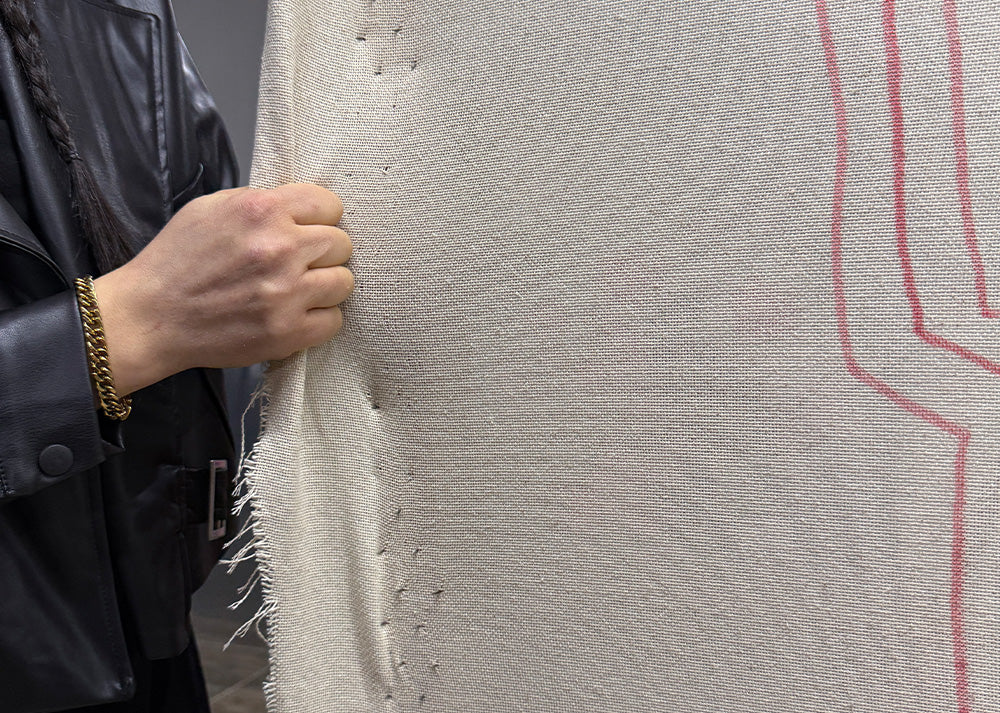
Place the fabric over the frame. Place the first staple in the exact center of the top bar. Then, staple outwards to the left and right, spacing them about 2-3 inches apart, until the top edge is secure.
This is where you need to use your strength! Pull the fabric from the bottom edge downwards as hard as you can. The fabric needs to stretch. While keeping it taut, staple from the center of the bottom bar outwards to the edges.
Now move to the sides. Pull the fabric both outwards and slightly up/down (to remove wrinkles) and staple. When you reach the corners, fold the fabric neatly like "wrapping a gift" and secure with extra staples.
3. The Check: Drum Test
The simplest way to tell if the fabric is tight enough is the sound test.
Flick the center of the fabric with your finger.
You should hear a hollow "BOOM" sound.
- Gripper Strips: If you produce rugs frequently, nail "Carpet Grippers" to your frame instead of using staples. These spiked strips hold the fabric without staples and reduce restretching time to seconds.
- Leave Allowance: When cutting your fabric, leave at least 2-4 inches (5-10 cm) of excess on all sides of the frame. You need this margin to grip and pull effectively.
The better your cloth grips the frame, the more control you have over the tufting gun. Correct tension is the secret to professional rugs!