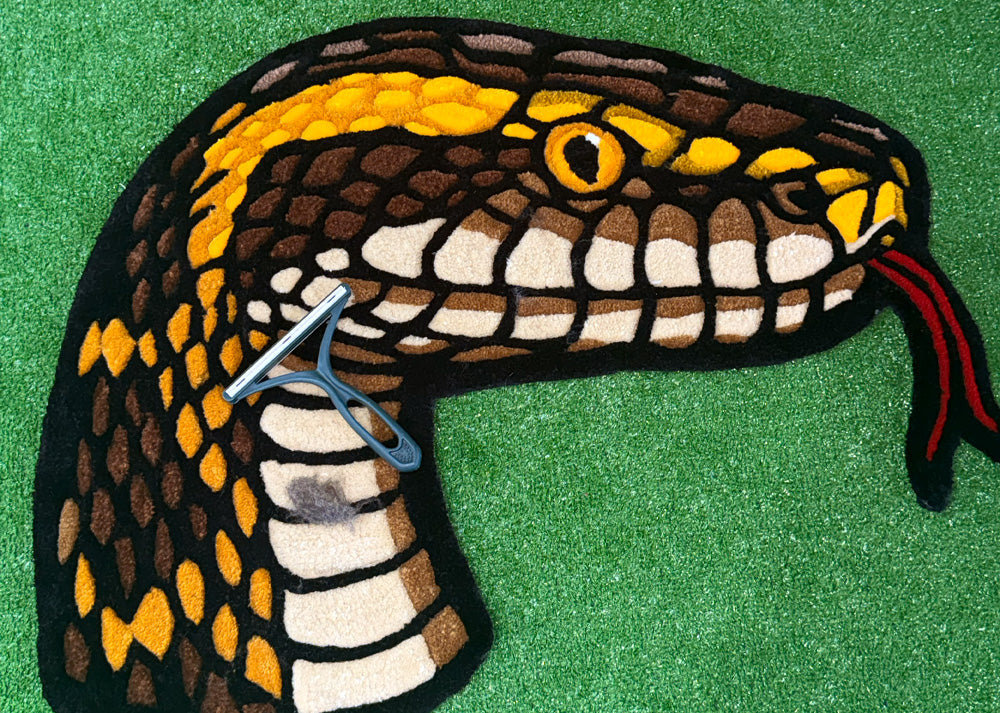
You’ve just brought home a brand new, colorful tufted rug, but a few days later, you notice little fuzz balls on the surface or excessive shedding when you vacuum. Your first instinct might be to ask, "Is my rug poor quality?"
Shedding in tufted rugs depends on many variables, from the production technique to the type of yarn used. In this article, we’ll dive into the details to help you figure out whether the shedding on your rug is a "natural process" or a "manufacturing defect."
1. Don't Confuse It with "Natural Shedding"
First of all, it's important to know this: It is completely normal for newly made wool or acrylic rugs to shed fuzz during the first few weeks. During the tufting process, yarns are punched vertically into the fabric, and the surface is shaved (carved). Loose fibers trapped between the yarns during this shaving process will naturally come to the surface as you vacuum.
| Feature | Natural Shedding (Fuzzing) | Structural Unraveling (Sprouting) |
|---|---|---|
| Timing | Decreases within the first 2-4 weeks. | Continues and worsens over time with use. |
| Amount | Looks like cotton-like fuzz in the vacuum bin. | Creates bald spots on the rug; whole yarns pull out. |
| Cause | Leftover loose fibers from post-production carving. | Poor quality glue or incorrect tufting techniques. |
2. The 3 Main Causes of Severe Unraveling
If the shedding on your rug isn't just fuzz, but entire strands of yarn coming out (as if it's unraveling), one of the following issues might be occurring:
Low-Quality Yarn
Short-staple, fragile yarns cannot withstand friction. Especially low-quality acrylic or thin hand-knitting yarns struggle to anchor into the rug backing and will eventually snap or pull away from the surface.
Insufficient Gluing
The latex glue on the back of a tufted rug acts as the "cement" that locks the yarns into the fabric. If the glue is applied too thinly or is of poor quality, the yarns won't hold to the base and will detach during the lightest vacuuming.
Faulty Tufting Technique
If the tufting gun’s needle depth is set incorrectly or the density of the stitches into the primary cloth is too low, the loops remain loose. Sparsely tufted rugs prevent the yarns from supporting each other, triggering structural shedding.
The Pull Test
To test the quality of your rug, gently pinch a cluster of yarns and pull. If the yarns resist, your rug is solid. However, if the yarns come out easily with no resistance, it means the glue lock on the back is failing to do its job.
3. How Can You Prevent Shedding?
To maintain your rug’s shape and extend its life, keep these steps in mind:
- Vacuum Settings: Initially, use a medium suction setting rather than high power. Avoid vacuums with beater bars or rotary brushes; these aggressive attachments can pluck the yarns right out.
- Backing Check: Make sure the secondary backing on your rug is fully secure. A strong backing prevents the latex from crumbling, which in turn keeps the yarns locked tight.
- Proper Cleaning: Avoid cleaning methods that soak the rug completely. Excess water can break down the latex glue structure on the back, causing the yarns to loosen.
In Summary: Patience and Quality
The light fuzzing seen in the first few weeks of a new tufted rug is simply the natural "break-in" period of a handcrafted item. However, if your rug is constantly losing whole yarns and the pile is thinning, it's usually an issue with material quality.
A high-quality tufted rug, combining the right materials with professional craftsmanship, will stay with you for years without structural shedding. Give your rug a little time, and enjoy the art!