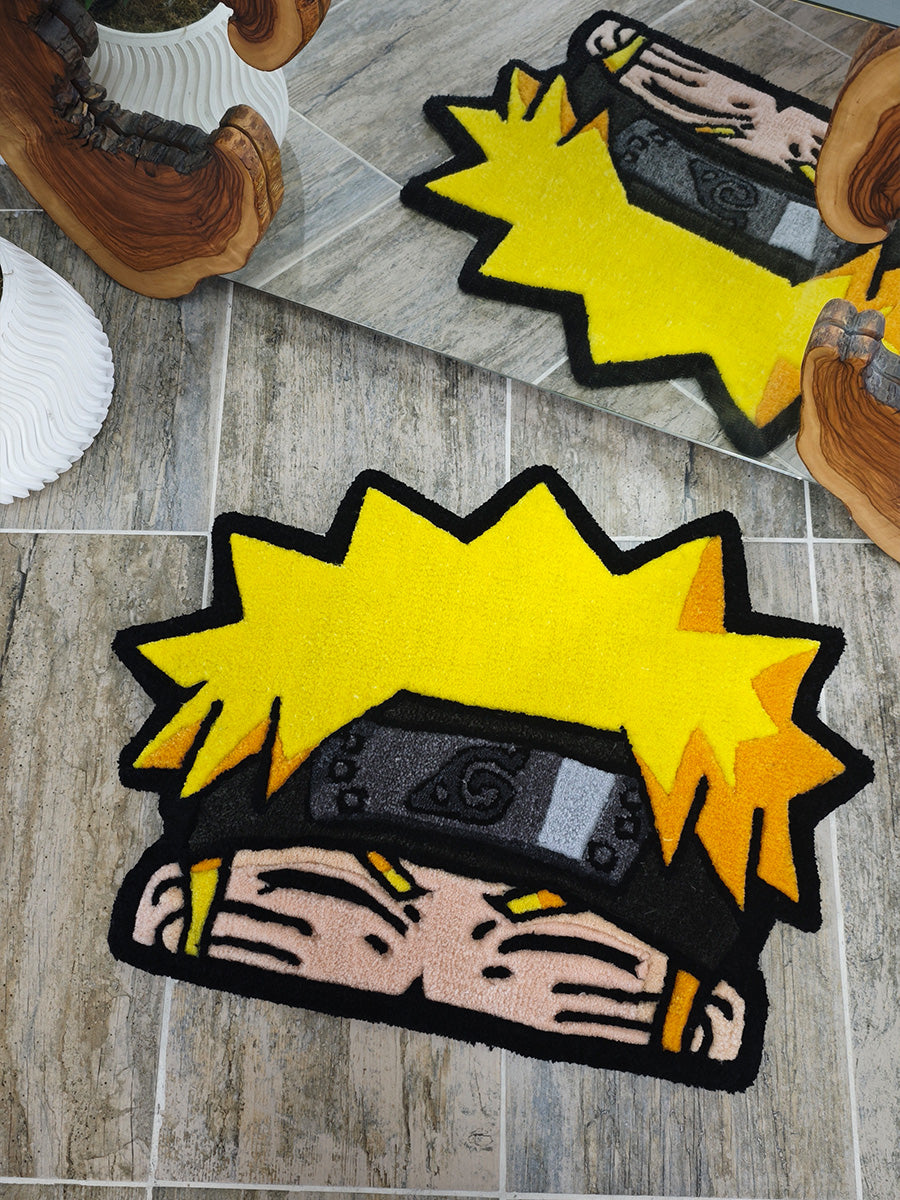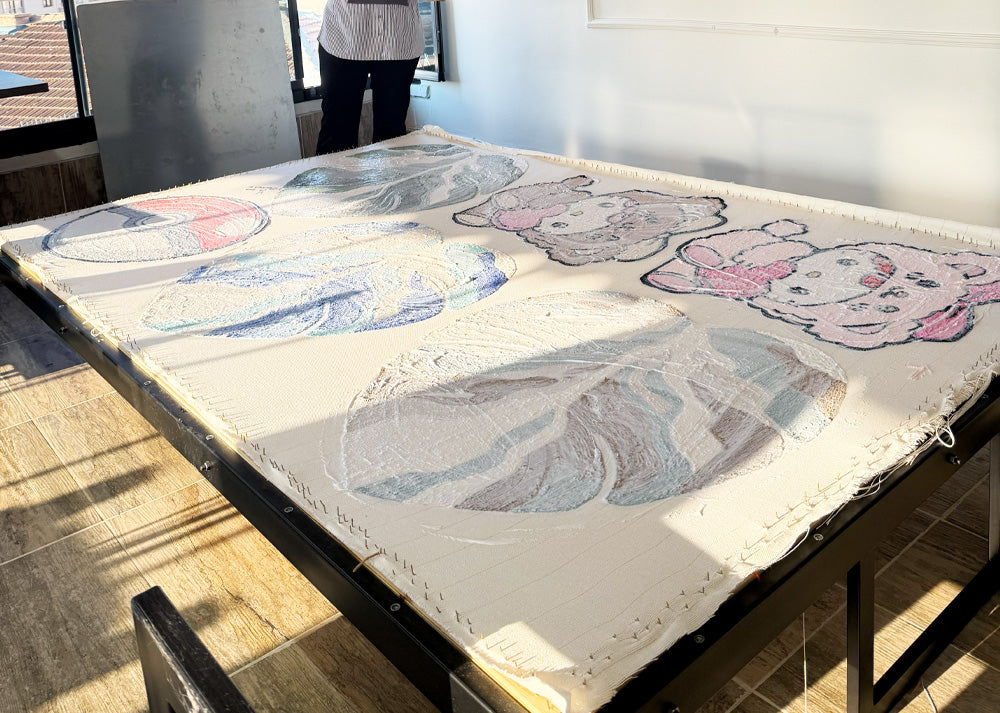
As mesmerizing as the colorful yarns on the front of a tufted rug are, the "invisible engineering" on the back is just as crucial. Once the tufting is complete, transforming the rug from a mere "piece of textile" into a durable home accessory depends entirely on the gluing and curing process.
So, why doesn't this glue dry immediately? What happens during the drying phase? How does this process affect your rug's lifespan? Let's dive into the details of that silent waiting period where a handmade rug truly builds its character.
1. Sealing the Yarns into the Rug
At this stage, the yarns punched into the backing cloth with a tufting gun are merely "guests" in the rug. What anchors them permanently is industrial-grade latex glue. The main functions of this glue are:
- Locking: It traps every single loop of yarn securely into the pores of the backing cloth.
- Flexibility: It doesn't become bone-hard when dry; it allows the rug to remain flexible enough to be rolled up.
- Durability: It prevents shedding and yarn loss during vacuuming or everyday use.
2. The Drying Process Timeline
3. What Speeds Up or Slows Down the Process?
The drying speed isn't just about the clock. The conditions in the production studio directly impact this timeframe:
At lower temperatures, the evaporation of the glue's water content slows down. Ideal curing happens at room temperature (68-77°F / 20-25°C).
High humidity is the biggest enemy of drying glue. In damp weather, the drying time can easily double.
Stagnant air causes moisture to hang over the surface. A continuous flow of fresh air significantly improves drying quality.
4. The Dangers of Moving the Rug Too Early
Applying the secondary backing or removing the rug from the frame before it's fully cured can cause irreversible issues:
- Odor Issues: Trapped moisture in the glue can lead to unpleasant, musty smells down the line.
- Deformation: A rug taken off the frame before fully drying can warp or curl inwards as the glue continues to shrink and pull.
- Moisture Transfer: If the core remains wet, the moisture could transfer to your floors when laid down, potentially damaging hardwood.
The Finishing Touch of a Masterpiece
A skilled tufting artist knows that the tufting itself is only 50% of the work; the curing process is the other 50%. Once fully dry, any residual scent completely disappears, and the rug's structure feels solid and grounded. Only after this stage is the rug ready for carving, shaving, and taking its final shape.
Built to Last
When you purchase a handmade tufted rug today, that few-day drying period is actually an investment that ensures your rug will stay intact in your home for 10-15 years without shedding. Proper curing means lasting durability.
This inherent patience required for handcrafted goods is their most valuable trait, setting them apart from mass-produced items. That solid, premium feel you get when you lay your rug on the floor is the direct result of those quiet hours of curing.