Tufting Blog

Is 100% Acrylic the Same as Nylon? | Rug Material Guide
When shopping for rugs, it's easy to get lost among terms like "Acrylic," "Polyamide," and "Polyester." But the most common question we get is: "Is an acrylic rug the same as nylon?" The short answer: No. Both are synthetic (man-made) materials, but their chemistry, texture, and purpose are completely different. One mimics wool, while the other is closer to plastic. At GG Tufting, we clarify the difference between these materials and explain why acrylic is known as the "quality synthetic" for your home. 🤔 1. Busting the Myths Common Myth "All synthetics are nylon, feel like plastic, and make your feet sweat." Scientific Fact Acrylic and Nylon are different polymers. Acrylic was engineered specifically to mimic wool, offering high breathability. 🔬 2. Under the Microscope The fundamental difference lies in the fiber structure. Nylon is straight and slippery, while acrylic is curly and bulky. Fiber Structure Simulation ACRYLIC (Synthetic Wool) Curly, Bulky, Matte NYLON (Polyamide) Straight, Thin, Shiny 🖐️ 3. The Touch Test Even without seeing the label, you can tell the difference just by touching the rug. ☁️ The Acrylic Feel Soft, warm, and has a substantial grip. When you run your hand over it, it feels "wooly." It has low luster, looking more matte and luxurious. 🧊 The Nylon Feel Slippery and cold. Your hand slides right off. It is generally shinier and the synthetic (plastic-like) feeling is more obvious. 📊 4. Which One is Better? The "best" material depends entirely on where you plan to use it. Feature Acrylic (Our Choice) Nylon (Polyamide) Best Use Case Living Room, Bedroom, Home Office, Hotel, Malls (Commercial) Comfort High (Soft and Warm) Medium (Firm and Cold) Stain Resistance Excellent (Repels Water) Medium (Absorbs Water) Durability Very Good Excellent (Best for abrasion) Appearance Matte and Natural Shiny and Synthetic 🏠 5. Why Acrylic for Tufting? Nylon is incredibly tough, which is why it's used in hotel corridors where people walk with shoes. But you don't wear shoes in your living room; you want softness under your bare feet. Acrylic offers the comfort and luxurious look of wool, with the added benefits of being synthetic: it is moth-proof, mold-resistant, and easy to clean. That is why Acrylic is the gold standard for modern, hand-tufted design rugs. Verdict: Acrylic is Not Nylon! Acrylic is the "aristocrat" of synthetics. It doesn't give off an industrial vibe like nylon; instead, it offers an experience closest to natural wool. At GG Tufting, we avoid the hardness of nylon or the cheapness of polyester. Instead, we choose 1st Class 100% Acrylic yarn for our collections—yarn that feels peaceful to the touch, keeps colors vibrant, and is easy to clean. Browse our models to feel the quality difference.
Learn more
What is the Tufting Technique? | The Ultimate Guide
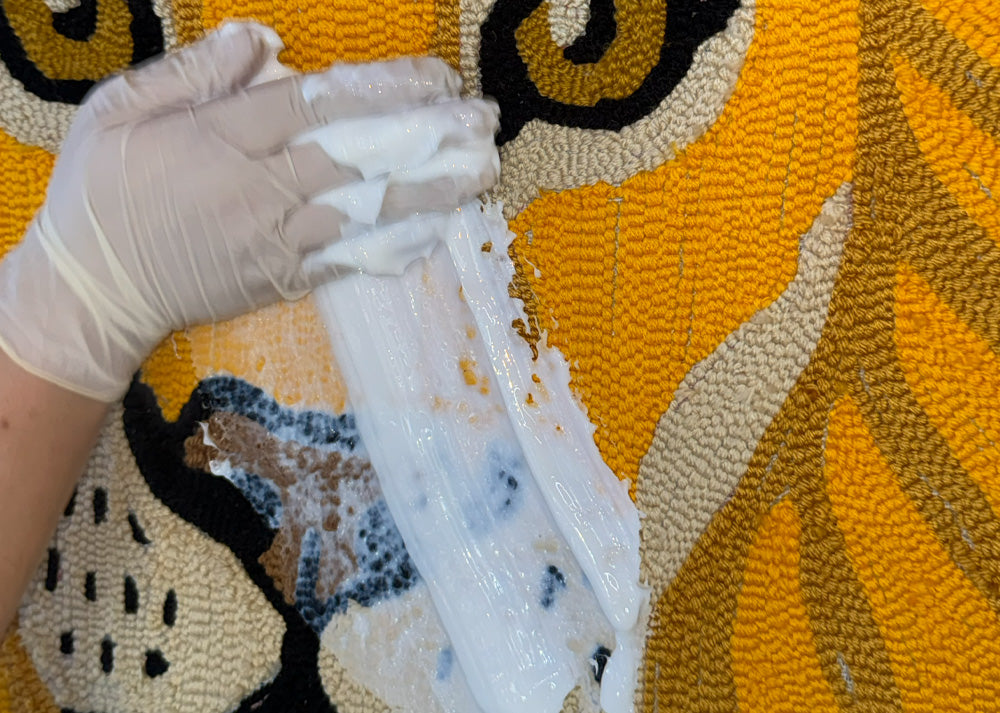
When you think of rug weaving, you might imagine massive looms, thousands of hand-tied knots, and months of labor. That is the traditional way. However, the modern world of decor demands speed, flexibility, and unlimited design freedom. This is where the Tufting Technique takes the stage. Tufting is where textile engineering meets craftsmanship; a special method where yarn is "punched" into the fabric rather than knotted. At GG Tufting, we explain the engineering behind those modern, soft, and artistic rugs adorning your homes in the simplest way possible. 💡 1. The Basic Principle: "Punch & Retract" Technical Definition: The tufting technique is based on the principle of using a "Tufting Gun" to push yarn through a pre-woven backing material (Primary Cloth) at high speeds, creating "U" shaped loops. 🧵 Yarn Feeding Fed through the back of the gun. ➜ Tufting/Punching Forms a "U" shape in the fabric. ➜ ✂️ Cut Pile Ends are cut to create a soft surface. ⚙️ 2. How is a Tufted Rug Constructed? Tufting isn't just about weaving; it is a multi-layered construction process. 1 🖼️ Setting the Frame Special tufting cloth is stretched tightly, like a drum skin, over a wooden or metal frame. The design is then projected or drawn onto this canvas. 2 🔫 Tufting Process Using a tufting gun, the design is filled with colored yarn. The gun operates at 40-50 stitches per second, rapidly embedding the yarn into the fabric. 3 🧴 Lamination (Gluing) The yarn is only punched in, not tied. To secure it, a special industrial latex glue is applied to the back, "locking" the fibers in place. 4 🪒 Shearing & Finishing The rug comes off the frame. The surface is sheared by machine for smoothness, and the design details are carved out (Carving) for a 3D effect. 🆚 3. Tufting vs. Traditional Weaving Here is the technical difference between a classic machine-made rug and a GG Tufting handmade piece: Feature Tufting Technique Traditional Weaving Yarn Connection Punched into fabric + Glued. Knotted onto warp and weft. Backing Pattern not visible on back (covered). Pattern is visible on the back. Design Limitless shapes (Asymmetrical). Usually rectangular and symmetrical. Texture Softer, plush, and fluffy. Tighter and flatter. 🎨 4. Why Do We Call It "Art"? 🖌️ Painting with Yarn In tufting, the person holding the gun is like a painter. They can move the machine freely over the canvas. Straight lines, curves, abstract shapes... This technique means "freedom" in the textile world. That’s why every piece is not just a product, but a unique work of art. Where Technology Meets Craftsmanship The tufting technique combines the speed of modern technology with the precision of the human hand. The result is a product that is as durable as a machine rug, yet as special as a hand-woven one. To discover modern, artistic, and durable rugs produced with this special technique using the highest quality materials, browse the GG Tufting collections today.
Learn more
What is Tufting Acrylic? The Secret to Durable Rugs
The fullness, shine, and softness you feel when you pick up a tufting rug is no coincidence. There are hundreds of types of yarn sold on the market under the name "Acrylic Yarn"; however, the material used in professional rug production is something very special. We call this "Tufting Acrylic." So, what are the technical features that distinguish this material from standard knitting yarn, earn it the title of "Synthetic Wool," and extend the life of the rug? As GG Tufting, we transparently examine the raw materials of our products. 🧬 1. What Exactly is Tufting Acrylic? 🧶 Specially Engineered Material Tufting Acrylic is a synthetic fiber developed specifically for rug weaving (tufting). Its fiber structure mimics natural wool, its durability is enhanced, and its shine is optimized. Unlike ordinary acrylics, it is twisted and processed to withstand high machine speeds. 🆚 2. Tufting Acrylic vs. Standard Knitting Yarn Not every acrylic yarn is suitable for rugs. Here is the difference between yarn bought from a craft store and professional Tufting Acrylic: Feature Tufting Acrylic (What We Use) Standard Knitting Yarn Structure Multi-Ply Usually Single Ply Durability Resistant to crushing and pressure. Flattens quickly when stepped on. Texture Feels firm and full. Looser with air gaps. Purpose Flooring and Rugs Sweaters, Beanies, Scarves 🌟 3. The 4 Superpowers of Acrylic Rugs The advantages of having a GG Tufting rug produced with this material in your home: 🎨 Crystal Brilliance Tufting Acrylic locks the dye into the deepest part of the fiber. This ensures colors don't fade for years, and even neon colors "pop" like they did on day one. ☁️ Wool Touch When you touch it, you don't feel plastic; you feel the soft warmth of wool. This is why it's referred to as "Synthetic Wool" in the industry. 🛡️ Stain Repellent While natural wool absorbs water, Tufting Acrylic is hydrophobic (it dislikes water). Spilled liquids bead up on the surface, making cleanup incredibly easy. 🤧 Hypoallergenic It has a low dust-holding capacity. It does not harbor bacteria, mold, or moths. It is the safest option for those with asthma or allergies. 🔍 4. Fiber Structure: Why Doesn't It Flatten? Why do tufted rugs return to their original shape immediately after you place furniture on them or step on them? Weak Fibers 📉 ➔ Spring Effect ➰ Tufting Acrylic yarns go through a "heat-set" process during production. This gives the fibers a memory. Even if the yarn is crushed, it springs back to its original upright form. ❌ Myth: "Acrylic yarn is just nylon; it sweats and feels cold." ✅ Fact: Nylon (Polyamide) and Acrylic are different. Quality Tufting Acrylic is a material with high thermal insulation. It keeps you warm in winter and is not cold and slippery like nylon. Material Matters, Craftsmanship Matters Don't just say "it's just yarn." The quality of the acrylic used determines how a rug will look in 5 years, the clarity of the patterns, and the ease of cleaning. At GG Tufting, we use only industrial-standard, high-strength, first-class Tufting Acrylic yarns in our rugs. You can feel the quality that appeals to both your eyes and your touch in our collections.
Learn more
What is Cut Pile Tufting? The Secret to Fluffy Rugs
In the world of modern interior design, the secret to those beloved fluffy, velvet-soft rugs that your hand just sinks into lies in a single production technique: Cut Pile. This technique is the most popular and aesthetic face of the tufting art. It makes up the vast majority of GG Tufting collections. Let's explain why we love this weaving style so much and the value it adds to your home, without getting bogged down in technical jargon. ✂️ 1. What Exactly is Cut Pile? It refers to the way the yarn stands on the surface of the rug. The best way to understand the difference is to compare "Cut Pile" (what we use) with "Loop Pile": Cut Pile The yarn tips are cut by scissors. They stand upright, open, and spread out, creating a soft surface. Loop Pile The yarn is not cut; it stays in loops like knitting. It creates a harder, sportier surface. 🌟 2. What Are the Benefits? ☁️ Velvet Feel Since the yarn tips are cut, the fibers are set free and "bloom" open. This gives the rug that famous cloud-like softness. It is the most comfortable type for walking barefoot. 🐈 Pet Friendly On Loop Pile rugs, cats' or dogs' claws can easily get caught in the loops. With Cut Pile rugs, since the loops are cut open, there is no risk of claws getting snagged. 🎨 Sharp Colors Cut yarn ends absorb and reflect light better. This makes the patterns look sharper and the colors appear more matte and sophisticated. 🗿 3. Allows for Sculpting 📐 The Secret to the 3D Look The biggest advantage of the Cut Pile technique is that it is suitable for Carving (or Shearing). Since the yarns stand upright, they can be shaped with scissors or clippers. Channels are carved between different colors to give the rug a 3D, embossed look. This is not possible with Loop Pile rugs. 📊 4. Comparison Table Feature Cut Pile (Our Choice) Loop Pile Texture Soft, Fluffy Hard, Textured Look Matte and Luxurious Knit-like Cleaning Dust can settle inside (Needs strong vacuum) Dirt stays on surface Usage Living Room, Bedroom, Nursery Office, Hallway, Outdoors Question: My rug is shedding, is this normal? Yes, this is very normal for Cut Pile rugs. During production, tiny leftover bits of yarn from the cutting process (fluff) come to the surface for the first few weeks. We call this "shedding." With regular vacuuming, it stops in a short time, and the rug settles into its true form. The Technical Name for Comfort In summary, "Cut Pile" is not just a production technique; it is the technical name for comfort, softness, and aesthetics. If you want to create a warm, inviting, and artistic atmosphere in your home, your choice should definitely be Cut Pile. At GG Tufting, we weave our rugs stitch by stitch using the Cut Pile technique, and then reveal the designs by hand-carving them. You can check out our store to discover that unique texture in our collections.
Learn more
What is a Tufting Gun? The Tool Behind the Art
You’ve likely seen those mesmerizing videos on social media: a gun rapidly shooting yarn into fabric, creating a colorful design in seconds. That "magic" tool is called a Tufting Gun. This technological marvel is the unsung hero of modern decor, transforming traditional rug making—a process that used to take months—into something that can be done in just a few days. But how exactly does this machine work, and what are the different types? Let’s take a closer look at the technology at the heart of the GG Tufting studio. 🛠️ 1. What is a Tufting Gun? Mechanical Definition: A tufting gun is an electric, handheld hybrid of a high-speed sewing machine. It mimics the needle movement of a sewing machine but, instead of stitching fabric together, it pushes yarn through the backing fabric to create a "loop" or pile. Traditionally, rugs were knotted by hand, one by one. This machine operates at an average of 40-50 stitches per second, increasing human speed hundreds of times over. ⚙️ 2. How It Works: Pierce and Cut When you pull the trigger, a complex mechanism inside kicks into gear. Here is the step-by-step process: 💉 Needle Movement The thick needle at the tip pierces the taut fabric, pushing the yarn through to the other side. 🦶 Presser Foot The "foot" of the machine presses against the fabric to prevent tearing and keep the gun from bouncing back. ✂️ Scissor System Once the needle enters, the internal scissors open and cut the yarn, creating that fluffy "Cut Pile" texture. 🆚 3. Cut Pile vs. Loop Pile Machines In the tufting world, there are two main machine types (or hybrids that do both). This choice determines the character of the rug. Which Machine Creates Which Texture? AK-1 (Cut Pile) The most popular model. The machine inserts the yarn into the fabric and automatically cuts it. The result is a velvet-like, soft, upright, and fluffy texture. Most GG Tufting rugs are produced using this technique. AK-2 (Loop Pile) This machine does not have scissors at the tip. It pushes the yarn in and pulls back without cutting. The result is a looped surface, similar to knitting. It feels firmer and has a more sporty look. 📊 4. The Power of the Machine Here is the technical capacity of a standard professional tufting gun: Speed (RPM) 2,400 - 3,000 stitches per minute Pile Height Adjustable between 7mm and 21mm (Determines rug thickness) Weight Approx. 3 lbs / 1.4 kg (Great arm workout if held for long!) Power Consumption 70W - 100W (About the same as a standard light bulb) ⚠️ Not as Innocent as It Looks: A tufting gun is a high-speed power tool with sharp scissors and a needle at the tip. It is vital to tie back long hair and never touch the tip without unplugging the machine. While it may look like "just pulling a trigger," it requires serious craftsmanship and caution. The Dance of Technology and Craft The tufting gun is a magnificent tool that combines the precision of the human hand with the speed of a machine. However, remember that the machine is just a tool; the art is created by the hand holding it. Pattern tracking, speed control, and yarn feeding depend entirely on the operator's skill. If you want to see the finest examples of this technology and craftsmanship in your home and own flawlessly woven modern rugs, check out the GG Tufting collections. We use the technology, but we weave the art.
Learn more
What Makes Acrylic Rugs Special? Ideally "Artificial Wool"
When reading labels while shopping for rugs, the most common term you encounter is undoubtedly "Acrylic." So, what actually is this superstar of the modern rug world? Why is it the indispensable material for handmade tufted rugs? Some call it "Artificial Wool," others "The Most Practical Fiber." At GG Tufting, we scrutinize the technical features of this special material that gives life to our designs and the comfort it adds to your home. 🧬 1. Acrylic: Where Science Meets Comfort 🐑 Brief Definition:Acrylic is a synthetic fiber derived from petroleum. However, what makes it special is that its fiber structure is engineered during production to resemble natural wool as closely as possible. That's why when you touch it, you feel the warmth of wool, not the coldness of nylon. 🌟 2. The 4 Superpowers of an Acrylic Rug Here are the main advantages of using an acrylic tufted rug in your home: ☁️ Wool-Like Feel Acrylic fibers are soft and voluminous like natural wool. They provide a dense feel under bare feet, unlike polyester rugs which can feel flat or slippery. 🎨 Vibrant Colors Dye molecules are locked inside the fibers. This prevents fading even in sunlight. The vivid neon colors of tufting art are only possible with acrylic. 🛡️ Moth & Mildew Resistant The biggest enemy of real wool rugs is moths. Since acrylic is synthetic, it does not harbor bacteria, fungi, or moths. It is safe for allergy sufferers. 👣 Crush Resistant Furniture legs or heavy foot traffic do not easily flatten acrylic. Thanks to its elastic structure, the fibers spring back to their original form. 🛡️ 3. Performance Against Tough Conditions Resistance Chart for Household Accidents ☀️ Sunlight High Fade Resistance 💧 Spills Repels Water, Stain Resistant 🔥 Heat Contact Medium (Keep Away from Fire) 🆚 4. Acrylic vs. Others Why do we prefer acrylic over polyester or polypropylene? Feature Acrylic Rug Polyester Rug Texture Dense & Matte (Wool-like) Shiny & Slippery (Plastic-like) Stain Resistance Excellent (Hydrophobic) Good (Attracts oil stains) Lifespan Long-Lasting Short (Mats quickly) Price Mid-Range Budget 🧹 Cleaning Hack: Acrylic rugs absorb very little water. Therefore, if you spill tea or coffee on it, blotting it immediately with a paper towel can save 90% of the stain before it penetrates the yarn. The Price/Performance Champion Acrylic rugs combine the luxurious look and comfort of wool with the durability and easy cleanability of synthetic materials. That is why it is the most preferred material in modern home decoration, especially in the art of Tufting. Thanks to the Premium Acrylic yarns we use in GG Tufting collections, you can enjoy both visually appealing vibrant designs and soft textures that you will use with pleasure for years.
Learn more
What is Tufting Cloth and Why is it Essential?
Just as canvas is crucial to a painter, fabric is essential to a tufting artist. However, tufting cloth is vastly different from regular cotton sheets or curtains. It is engineered to withstand a machine that punches dozens of times per second. It usually becomes invisible, completely covered by yarn once the rug is finished, but it is the skeleton that determines the quality, durability, and form of the rug. At GG Tufting, we want you to get to know this special material, the cornerstone of our production. 🧶 1. What is Primary Tufting Cloth? Technical Features Tufting cloth is a specialized weave made of 100% polyester or a polyester-cotton blend, possessing industrial-grade durability. Yellow Lines: The fabric features yellow guide lines every 2 inches (5 cm). This prevents the design from becoming distorted. Flexible Structure: It expands when the needle enters and closes the hole to grip the yarn when it exits. Tear-Resistance: It is resistant to high tension and the repetitive impact of the machine. 🔄 2. Two Distinct Roles: Primary vs. Secondary Two separate layers of fabric are used in the tufting process, each with a different function. 1️⃣ Primary Cloth Role: To be the canvas. It is the main carrier where the yarn is punched and the design is drawn. This is the fabric stretched on the frame. 2️⃣ Backing Cloth (Secondary) Role: Protection and aesthetics. It is the lining fabric (felt or non-slip base) glued on after the rug is finished to cover the messy yarn back and latex. 🚫 3. Why Not Use Burlap or Regular Cotton? The tufting gun is a powerful tool. Choosing the wrong fabric will result in your hard work tearing apart. Fabric Type Suitability Why? Tufting Cloth (Grey/White) PERFECT Fibers are flexible, grip the needle, won't tear, and have guide lines. Monks Cloth RISKY Suitable for Punch Needle (hand tool), but may shred under the speed of an electric gun. Burlap (Jute) NO Very brittle. The needle breaks the fibers upon entry, and the rug sheds over time. Calico / Cotton Canvas NEVER The weave is too tight. The needle punctures (tears) the fabric instead of sliding through; there is no recovery. 💎 4. The Skeleton of a Quality Rug Advantages of Proper Tufting Cloth 📐 Symmetrical Design 💪 Long Life Span 🔒 Tight Yarn Grip ⚖️ Even Tension 💡 GG Tufting Insight: When you hold a rug, check the back. If it is neatly covered with a lining (Backing Cloth) and the edges are finished with binding tape, you can be sure the internal skeleton (Primary Cloth) is also high quality. Quality is hidden in the details. The Foundation Must Be Strong Tufting cloth is the unseen hero of a rug. No matter how beautiful the design, if the fabric is poor quality, the rug will lose its shape over time. If you want to own professional-quality rugs built on the strongest infrastructure, without dealing with material sourcing, stretching techniques, or tearing risks, check out the GG Tufting collections. We leave nothing to chance.
Learn more
What is a Tufted Rug? The Ultimate Guide
While scrolling through TikTok, Pinterest, or Instagram, you keep seeing those colorful, fluffy, and unusually shaped rugs under the same hashtag: #TuftedRug. But what lies behind this cool name? Is it a new type of rug, or an art movement? Known technically as "Tufting," this concept is actually the most modern and freest production technique in the history of rug making. At GG Tufting, we explain this global term and the value it adds to your home in the simplest way. 📖 1. What is a Tufted Rug? Tufted Rug /tʌftɪd rʌg/ • (noun phrase) Tufted: The process of inserting yarn into a base to create tassels or loops.Rug: A floor covering.Full Definition: "A modern rug produced by processing yarn into a base fabric with a special gun or machine, secured with glue on the back." So when we say "Tufted Rug," we don't mean classic knotted oriental rugs, but modern rugs where yarn is processed onto a canvas like painting a picture. ⚙️ 2. The Production Logic To understand why these rugs are so popular, we need to look at the making process. It's almost like construction work: 🕸️ 1. The Skeleton A blank fabric (Primary Cloth) is stretched onto a frame, and the design is drawn. 🔫 2. The Tufting The tufting gun shoots yarn into the fabric and pulls it back (creating loops). 🧴 3. Securing The back is coated with latex glue to keep the yarn in place. ✂️ 4. Shaving The surface is trimmed/carved to achieve a smooth, velvet-like texture. 🆚 3. Hand-Tufted vs. Machine-Tufted Not every "Tufted Rug" is the same. There are two main types in the market: Feature Hand-Tufted (Handmade) Machine-Tufted (Factory) Production Tool Human hand & Tufting Gun Massive electric weaving machines Uniqueness Unique (One of a kind). Like a piece of art. Thousands of copies. Standardized. Texture Feel Dense, full, and deep. Flatter and thinner. Value High, involves craftsmanship. Economical, mass production. 🌟 4. Why Does Everyone Want a "Tufted Rug"? 🎨 Unlimited Design Unlike classic rugs, a Tufted Rug can be an anime character, a melting clock, or your company logo. There are no rules. ☁️ Soft Texture Since the "Cut Pile" technique is usually used, the surface is as soft as velvet. Walking on it barefoot is a pure delight. 🚀 Fast Production While a knotted hand rug takes months to make, a Hand-Tufted rug can be completed in days. This makes custom orders possible. ✂️ Cut Pile Yarns are cut and stand upright. The most popular style. It is fluffy and soft. Ideal for home environments. ➰ Loop Pile Yarns are not cut; they stand in loops like knitting. It has a firmer and sportier look. Good for high-traffic areas. Modern Floor Art "Tufted Rug" is not just a carpet, but an art form designed for floors. If you are bored with standard patterns and looking for tactile pieces with a story, handmade with care, you have learned the right term. To see the highest quality "Hand-Tufted" examples produced with craftsmanship that catch global trends, explore GG Tufting collections and add a modern signature to your living space.
Learn more
What is a Tufting Workshop? The Ultimate Guide
Welcome to the most popular weekend activity of recent years! Imagine escaping the city noise, grabbing a "gun" (a tufting gun, of course), blowing off some steam, and heading home with a fluffy rug you designed yourself. Tufting Workshops are art and craft sessions that combine creativity with fun, require no prior experience, and leave you with the pride of saying, "I made this!" So, how does the process work? At GG Tufting, we take you behind the scenes of this delightful experience. 🤔 1. What Exactly is a Workshop? Quick Definition: A Tufting Workshop is a daily course held in a professional studio environment where, under the guidance of instructors, you create your own rug, mirror frame, or wall art from scratch in about 3-5 hours. All materials (tufting gun, yarn, fabric) are provided by the studio. ⏳ 2. What Awaits You in the Studio? Here is the journey from the moment you step through the door to the moment you walk out hugging your new rug: Minutes 0-30 Design Selection & Sketching An image you selected beforehand or choose on the spot is projected onto the blank fabric. You then trace the outlines with a marker to create your template. Hours 1-3 The Tufting Phase The instructor shows you how to hold the gun. Then, you put on your headphones and start filling in your design with colorful yarn. This is the most fun and stress-relieving part. Final Hour Gluing & Shaving The back of the rug is glued and left to dry, and the surface is shaved with a machine to make it smooth. Final touches are applied. 👥 3. Who Is It Suitable For? 👫 Couples (Date Night) A perfect "create together" activity for couples tired of just going to the movies. 👯♀️ Friend Groups For those who want a creative day full of laughter instead of just grabbing coffee. 🧘 Stress Relief Seekers Ideal for anyone wanting a "digital detox" by focusing solely on sound and colors. 💰 4. Pricing and Duration (2024-25 Est.) Average Duration Between 3 to 5 Hours Cost Per Person ~ $45 - $80 (Varies by size) Finished Product Size Usually 20x20" or 27x27" (50x50cm / 70x70cm) What's Included Training, All Materials, Tea/Coffee ⚖️ 5. Pros and Cons of the Experience The Perks You get a completely unique product made by you. It’s an incredible way to blow off steam. Offers a chance to pick up a new hobby. A perfect environment for socializing. The Challenges Physically tiring (The gun has some weight). It’s loud (Motor sound). Your first rug might not be "flawless". You may need to hurry due to time limits. ✨ No Art Without Effort When you join a workshop, you better understand the arm strength, patience, and attention to detail behind those fluffy rugs. DIY or Buy? If your goal is to have fun, experience something new, and create a memory with your own hands, you should definitely attend a Tufting Workshop. It’s a priceless experience. However, if you say, "My time is limited, I don't want to get tired, but I want to see a professionally crafted, flawless designer rug in my home," then GG Tufting's expert collections are just for you. We did the hard work so you can simply enjoy it.
Learn more
What Does "100% Acrylic" Actually Mean? The Truth About Your Rug
When you're out shopping for rugs or scrolling through designs online, you'll often see the label "100% Acrylic" in the product details. But what does that really mean? Is it just plastic? Is it low quality? Or is it a budget-friendly powerhouse? Acrylic, the most popular material in the world of tufting, is actually a gift from textile engineering to rug lovers. At GG Tufting, we believe in transparency. Let's dive into the chemistry of the material that makes up our rugs and the value it adds to your home. 🧶 1. What is Acrylic? The "Artificial Wool" Reality Scientific Definition Acrylic is a petroleum-based synthetic fiber. However, what sets it apart from other plastics (like polyester or polypropylene) is that its fiber structure is the closest mimic to natural wool among all synthetic materials. That's why the industry calls it "Artificial Wool." So, when you touch an acrylic rug, you don't get that cold, slippery feeling of nylon; you get a warm, soft, and substantial feeling, just like wool. 💎 2. Why Do We Emphasize "100%"? In the market, some manufacturers mix Acrylic and Polyester yarns to cut costs. However, 100% Acrylic means: No cheap filler materials. Consistent softness across the entire rug. Maximum resistance against crushing and matting. 🌟 3. Why Is It a Great Choice for Your Home? 🎨 Color Vibrancy Acrylic locks dye into the fibers. This makes it highly resistant to sunlight, ensuring colors stay "as vibrant as day one" for years without fading or dulling. 🛡️ Stain Resistance While natural wool absorbs liquids, acrylic is hydrophobic (it hates water). Spills sit on the surface rather than soaking in immediately, making cleaning incredibly easy. 🐛 Moth-Proof The biggest enemy of real wool rugs is moths. Since acrylic is synthetic, it doesn't harbor moths, mold, or mildew. It is also hypoallergenic and safe for sensitive users. 💰 Affordable Luxury It offers the look and feel of real wool at half the price. It is arguably the rug type with the best price-to-performance ratio on the market. 🤔 4. Myths vs. Facts ❌ MYTH "Acrylic rugs smell like plastic and make feet sweat." ✅ FACT High-quality acrylic is odorless. It has high thermal insulation, keeping your home warm in winter. ❌ MYTH "Acrylic rugs mat and flatten immediately." ✅ FACT 100% Acrylic is resistant to crushing. The rugs that mat quickly are usually polyester blends. ⚖️ 5. Wool vs. Acrylic? Feature 100% Acrylic 100% Wool Softness Very High Very High Stain Resistance Better Medium (Absorbs Liquid) Color Options Unlimited & Vivid Matte & Natural Price Budget-Friendly Expensive 🔥 Its Only Weakness: Heat Acrylic is not as resistant to burning as wool. Fibers can melt if exposed to irons, hair curlers, or dropped cigarette ash. Therefore, caution is advised in areas like fireplace surrounds. The Smart Choice for the Modern Home 100% Acrylic isn't the "cheap alternative"—it's the "smart alternative." It is the ideal material, especially for homes with children, pet owners, and those who love decorating with vibrant colors. At GG Tufting, we choose Premium 1st Class 100% Acrylic yarns for our custom designs to best reflect the energy of colors and maintain their form for years. You can find quality that appeals to both your eyes and your budget in our collections.
Learn more
Choosing the Perfect Tufting Yarn: A Quality Guide
When you hold a tufting rug, the fullness, softness, and durability you feel are not coincidental. It all comes down to the "Yarn Engineering" behind thousands of loops. A tufting gun is a powerful, high-speed tool; ordinary knitting yarns often cannot withstand this speed and pressure. So, what makes a professional tufting yarn? Why do thickness, twist, and winding matter? At GG Tufting, we reveal the secrets of the high-standard yarns we use in our creations. 📏 1. The 3 Golden Rules of Ideal Yarn You can't just use "any yarn" for tufting. For the yarn to flow smoothly through the machine and look dense on the rug, it needs these 3 qualities: 💪 Durability (Strength) A tufting gun strikes 40-50 times per second. Weak yarn breaks constantly. The ideal yarn stretches slightly when pulled but retains its form without snapping. 🌀 Medium Weight (Worsted/DK) Very thin yarn (lace weight) falls out of the needle, and very thick yarn gets stuck. The ideal thickness is equivalent to Worsted Weight (Category 4) or roughly 3-4 mm. 🧶 Tight Twist The fibers forming the yarn must be tightly wound together. Loose yarns unravel at the gun's tip, creating a messy, "fuzzy" look on the rug surface. 🔄 2. Winding Style: Flow is Key When tufting, the yarn must flow like water without snagging. This is where the winding style becomes vital. 🧶 Standard Ball (Skein) RISKY The yarn pulls from the outside. It often rolls around, tangles, and can break the gun needle. Must be re-wound before use. 🧵 Conical Spool (Cone) PERFECT The yarn flows upwards with zero resistance. This is the required form for professional tufting workflow. 🧬 3. Why Does "Ply" Count Matter? Multiple Layers for a Dense Rug If you untwist a piece of yarn, you'll see how many strands it's made of. This is called "Ply." Single Ply (Weak) ➜ Multi-Ply (Ideal) The standard for tufting is 3 or 4-ply yarn. Additionally, in our production, we often feed 2 or 3 strands simultaneously into the gun. This doubles the density, making the rug look rich and firm. 🧪 4. Acrylic vs. Wool vs. Cotton? Material Feature Best Use Case 100% Acrylic Bright, soft, stain-resistant, and affordable. Decorative rugs, low-traffic areas. Wool Matte, natural, resilient to pressure, long-lasting. Living room area rugs, luxury designs. Cotton Natural but flat/matte. Can get dirty easily. Wall art (Tapestry) & decor. 🚫 What to Avoid: Extremely hairy "Mohair" yarns, glitter/novelty yarns, or slippery "Velvet/Chenille" yarns are generally not suitable for tufting guns. They can jam the scissor mechanism and damage the machine. Yarn Quality = Rug Quality Choosing the right yarn ensures that the rug not only feels good to the touch but also withstands years of use without matting, fading, or unraveling. The better the yarn, the more professional the result. If you want to own a high-standard, ready-made tufted rug without worrying about yarn weights, cone winding, or material testing, check out the GG Tufting collections. We’ve handled the details so you can enjoy the comfort.
Learn more
What Can You Create with Tufting? Beyond Just Rugs!
When people think of tufting, "rugs" are usually the first thing that comes to mind. However, tufting isn't just a technique for covering floors. It is a form of yarn sculpture, and the material (yarn) is so flexible that you can adapt it to almost any surface and form. The tufting gun is your brush, and the fabric is your canvas. So, what can be designed with this technique beyond flooring? At GG Tufting, we go beyond the standard and explore the fascinating world created with tufting. 🧩 1. The 4 Main Elements of Tufting Products created with tufting generally fall into four main categories. They are all made with the same technique (Gun + Yarn) but have different uses. 🏠 Floor Decoration Not just classic rectangular carpets; think asymmetric, figured, flower-shaped, or even logo-shaped "Rugs". 🖼️ Wall Art (Tapestry) Framed or hung directly, these are tufted masterpieces. They add warmth, texture, and an artistic touch to any wall. 🪑 Furniture & Accessories Fluffy pillow covers, custom chair cushions, or unique bench upholstery. 👜 Fashion & Apparel Patterns tufted onto bags, patches for the back of denim jackets, and detailed hat designs. 💡 2. Unique Tufting Ideas We said "not just rugs," so what specifically is popular? Here are the top trending tufting products globally: 🪞 Tufted Mirror Frames (Fluffy Mirrors) One of the biggest trends in recent years. A plain mirror gets a fluffy, wavy, or floral frame via tufting. It instantly changes the room's vibe and is perfect for "Selfies". ☕ Mug Rugs (Coasters) Mini rugs! These are 6-8 inch mini tufted pieces for your coffee cup or desk. They look stylish and protect your table surfaces. 🛋️ Designer Pillows (Punch & Tuft) Instead of standard printed pillows, think touchable, embossed (3D) surfaces. The Loop Pile technique looks especially great on pillows. 🌍 3. The Spectrum of Imagination Where to Use? Nursery Name Signs Gamer Room Rugs Office Logos Pet Portraits Stair Runners Bath Mats 🎁 A Revolution in Gifting Tufted products are the number one choice for those looking for "custom" gifts. What could be more special than a product woven with a friend's cat's face, a favorite anime character, or their initial? No Limits, Just Yarn Tufting is more than just a production technique; it is the modern way to add texture and color to any surface. On the floor, wall, sofa, or table; every tufted piece gives a space an "artistic" identity. If you want to discover the most creative, high-quality, and aesthetic examples of this limitless world, or add a special piece to your home or for your loved ones; GG Tufting collections are waiting for you. We dream, we design, and we weave for you.
Learn more